


Evidence that WEPROTECT works
WEPROTECT has undergone a major independent, Home Office-funded evaluation led by the University of Birmingham.
This large-scale academic study represents the most comprehensive independent evaluation of a remote domestic abuse legal support model in the UK.
The research analysed over 3,300 survivor cases and included more than 220 interviews with police officers, survivors, solicitors and Domestic Abuse Alliance staff across Sussex, Greater Manchester and West Midlands.
The findings provide robust independent evidence that WEPROTECT delivers measurable impact for survivors, police forces and the wider criminal justice system.
Why independent evaluation matters
Independent evaluation provides an unbiased measure of whether interventions like WEPROTECT actually work – in this case, reduce revictimisation and improve mental wellbeing.
It provides a real‑world account of operational implementation by gathering honest feedback from police, staff and survivors.
It ensures accountability by showing whether services like WEPROTECT are delivering what they promise.
It also informs future service design and funding decisions through evidence on effectiveness and cost‑effectiveness.
Evaluation design and scope

Evaluation overview
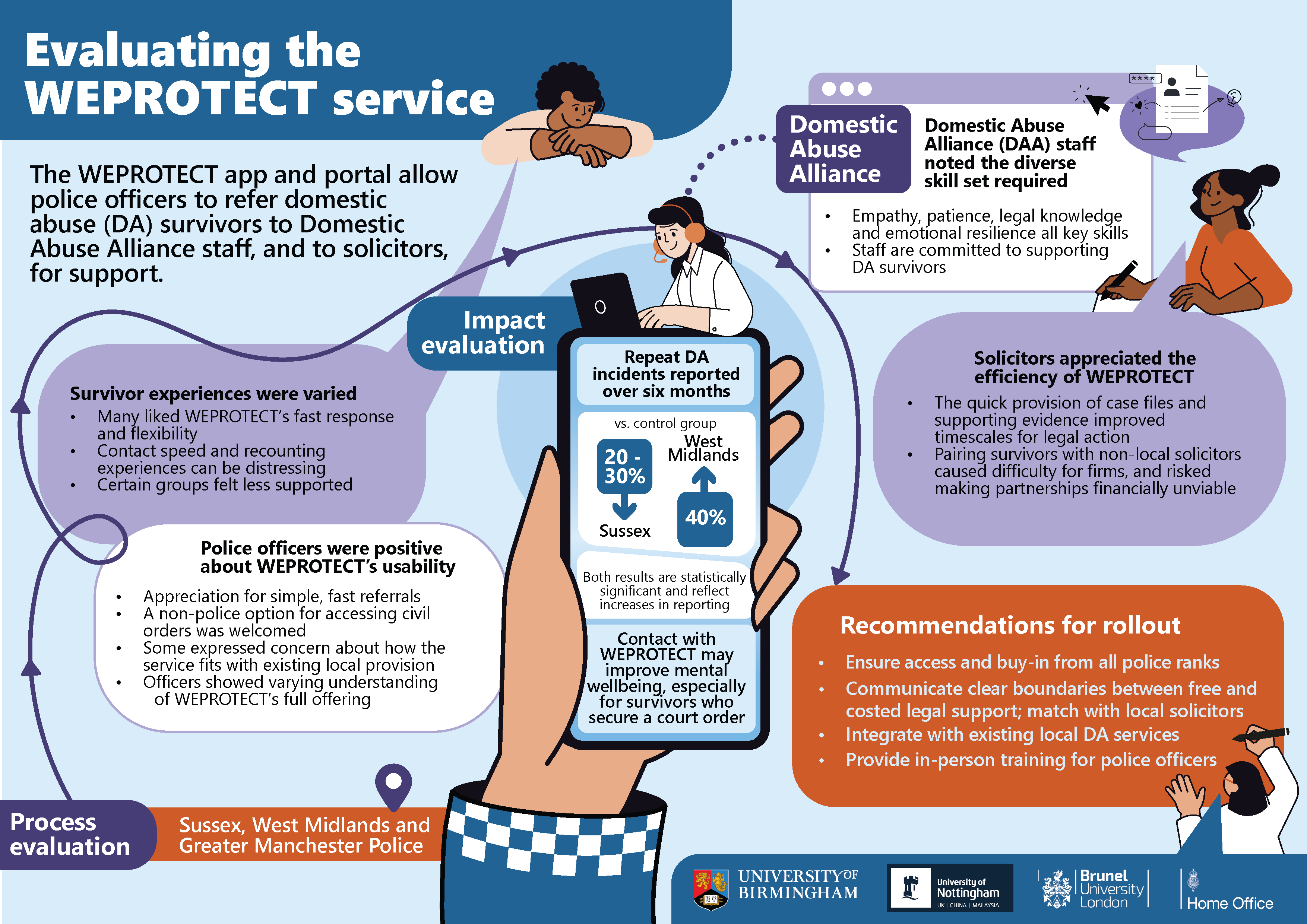
The independent evaluation was commissioned by the Home Office, through the What Works to Prevent Violence Against Women and Girls (VAWG) Fund, to assess how WEPROTECT performs in real-world policing environments and whether it delivers measurable safeguarding outcomes.
The Home Office-funded study builds on earlier NIHR-funded research, which mapped remote domestic abuse legal support services across the UK and identified the need for robust evaluation of remote delivery models.
Three police forces – Sussex Police, Greater Manchester Police and West Midlands Police trialled WEPROTECT during the study.
The evaluation analysed 3,358 survivor cases and included more than 220 in-depth interviews with police officers, solicitors, Domestic Abuse Alliance staff and survivors. It combined process evaluation, impact evaluation and economic analysis to assess implementation, survivor experience and outcomes.
Key impact findings
The independent evaluation shows that WEPROTECT delivers measurable safeguarding outcomes in operational policing environments.
Reduced repeat harm

Statistical analysis found a 20–30% reduction in repeat domestic abuse incidents at six months in Sussex among survivors referred to WEPROTECT.
WEPROTECT provides a clear legal support pathway when criminal thresholds aren’t met but risks remain high.
Operational adoption and integration

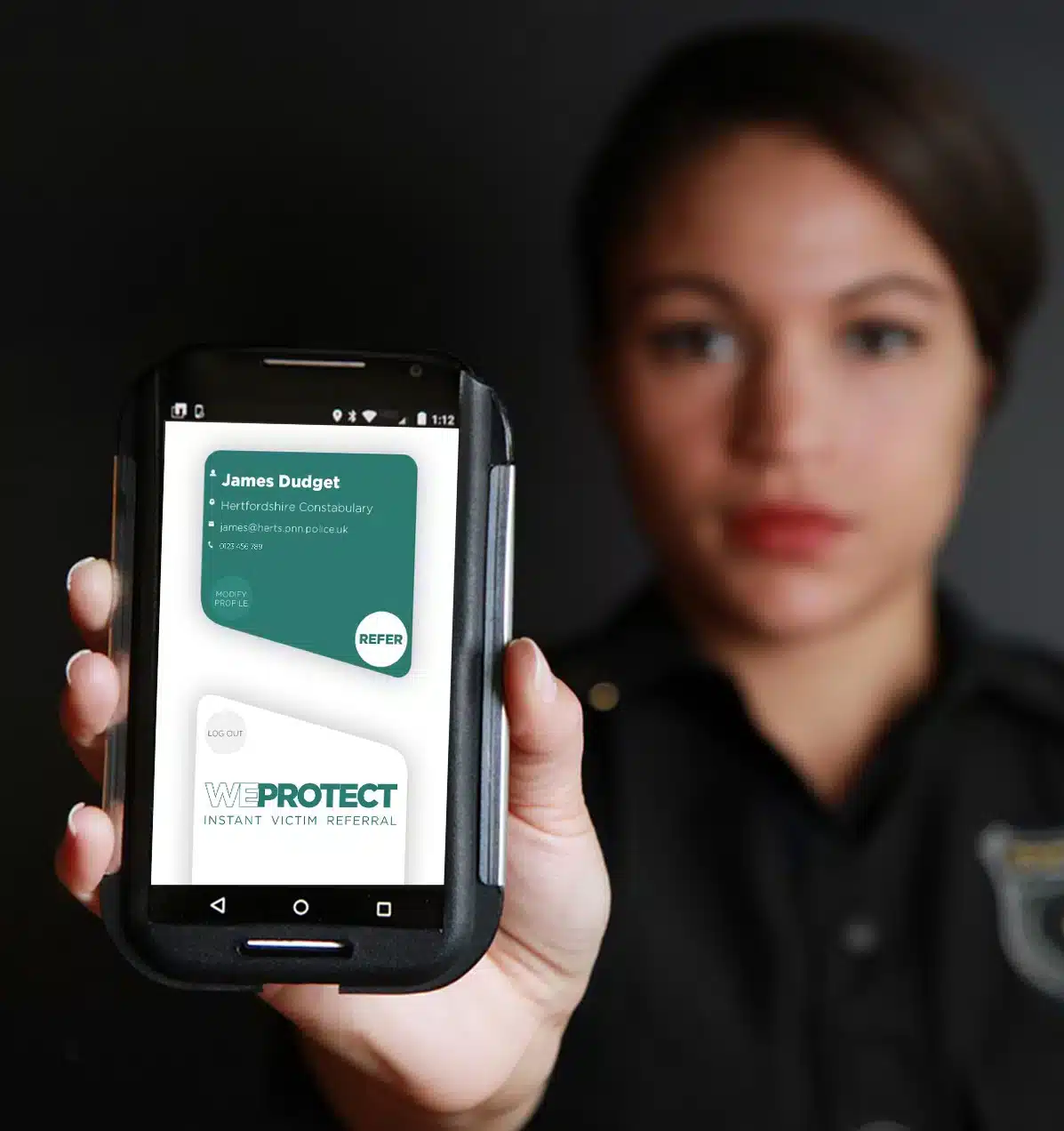
Officers demonstrated strong engagement with the referral pathway and the model integrated smoothly within existing police processes.
Senior police leaders actively supported adoption and officers described the app as “quick, intuitive and easy to use”, valuing it as a trusted safeguarding option that enhances victim autonomy.
Survivor engagement and wellbeing

Survivors reported rapid follow-up, often within hours of referral, increasing reassurance during high-risk periods.
Evaluation data also indicates a positive trend in mental wellbeing, particularly among survivors supported to secure a court order.
Economic value

In Sussex, WEPROTECT generated an estimated £2.2m £4.1m in net economic benefit through crime-related cost savings.
By accelerating access to civil legal protection the model demonstrates measurable public value.
Video: evaluation overview
Policy and reform context
The independent evaluation is published alongside ongoing reforms in policing and victim support.
The Government’s cross-government strategy Freedom from Violence and Abuse sets out an ambition to halve violence against women and girls.
A recent Government white paper “From local to national: a new model for policing” emphasises the importance of victim-centred services.
The evaluation shows that WEPROTECT reduces reported revictimisation, provides a rapid route to civil legal protection for survivors, and is valued by officers as a trusted, user-friendly referral pathway.
Recommendations and next steps
The research report recommends continued monitoring and national expansion of the WEPROTECT model informed by the evaluation evidence, including training for frontline officers and integration of the WEPROTECT referral pathway with local domestic abuse services.
Domestic Abuse Alliance remains committed to working with police forces and specialist partners to continue strengthening pathways to support for all survivors.
Learn more
The full independent evaluation can be accessed via the University of Birmingham’s official research page.
To discuss how your organisation can become a WEPROTECT referral partner, please Contact Us.
