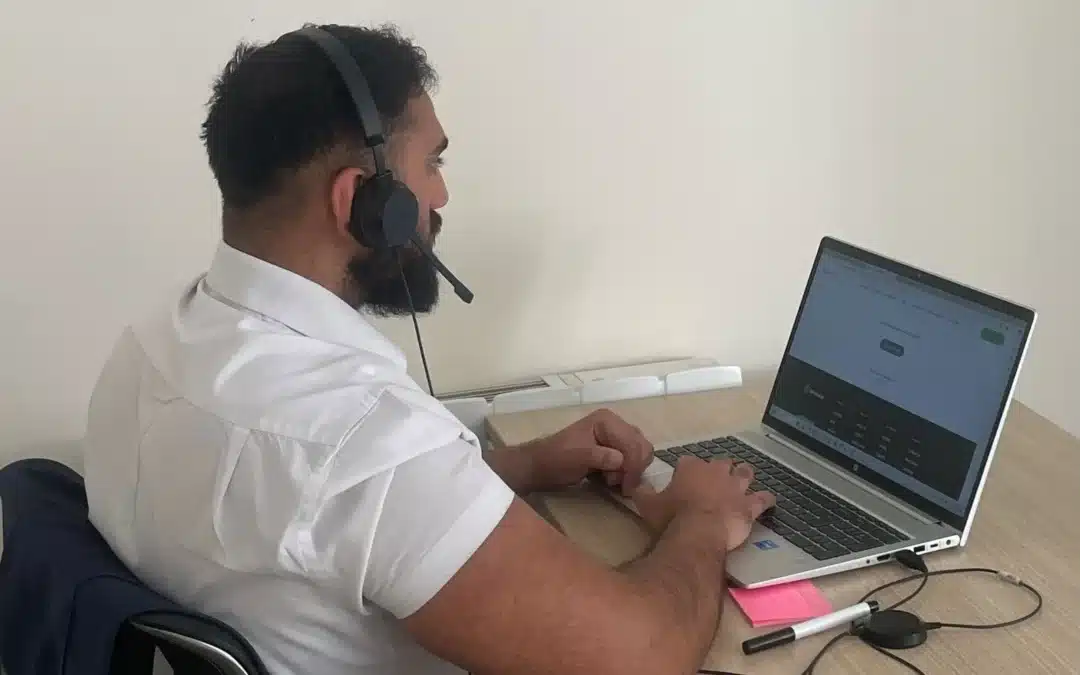
“A” is a call handling supervisor at the Domestic Abuse (DA) Alliance, ensuring our team establishes contact promptly with people who are
referred to our service. In this blog, A shares more information about his role and what it means to him.
“My day starts with a morning briefing with the call handling team, which is an opportunity for us to discuss new referrals and share information to ensure victim-survivors are offered the most appropriate legal support. Part of my day will also involve responding to emails from our referral partners and supporting ongoing referrals, including those from victim-survivors who have contacted us directly. I also oversee our in-house WhatsApp team which directly supports those who may be struggling to obtain documents i.e. for legal aid purposes. I deliver call handling training to our team, and I work closely with our casework team to ensure we deliver a seamless service, when people need it the most.”
What attracted you to your role at the DA Alliance?
“My background in the civil legal service has led me to supporting victim-survivors of domestic abuse. Many people feel like they cannot openly talk or are afraid to discuss their abuse. We offer them a lifeline here, which gives people the confidence to speak out about their abuse and seek support. Having seen first-hand how many victim-survivors have benefitted from the support we provide [over 35,000, to date] I have never looked back.”
What is the most rewarding aspect of your role?
“Being part of a survivor’s journey to securing a civil injunction is incredibly rewarding. I feel very proud – not only of myself and my colleagues – but also for the person we are supporting who has taken the huge first step to reach out and allow us to provide them with support.
“After listening to victim-survivors, and seeking advice from specialist support services, I created an assessment tool to help our team understand the risk factors when we receive a self-referral. This means we can quickly identify any practical and emotional needs that may need to be supported and, most importantly, any additional safeguarding measures which need to be put in place for the victim-survivor.”
Are there any frustrations or challenges and how have you overcome these?
“Unfortunately, many victims do not realise the scale of abuse they have experienced until after they leave the relationship. In the moment, they may feel that the abusive behaviour is acceptable, or they may blame themselves for the breakdown of the relationship. The legal process can feel overwhelming, which unfortunately leads some people to withdraw from process without legal protection in place. My focus is to provide the reassurance and support to help people overcome these fears and give them the confidence to take legal action.”
What more do you think could be done to support victims of domestic abuse?
“We support many victim-survivors who struggle to or cannot obtain funding to support legal action. Although
legal aid funding is an option which we always explore, eligibility for it is means-tested. Greater funding support for those experiencing domestic abuse would make a significant impact and give people more confidence in supporting protective legal action.”
What advice would you give to someone applying to work at the DA Alliance?
“Patience, compassion, and professionalism are key skills for this role. Sometimes, when they call us, it can be the first time that a victim-survivor has disclosed their abuse to anyone. Having a thorough understanding of the many forms that domestic abuse can take is crucial so that we can help victim-survivors understand that what they are experiencing is unacceptable. Our work here at the DA Alliance is rewarding and something to be proud of, however, it is challenging. We hear multiple accounts of survivors’ abuse every day. Fortunately, it feels like a family here – we all help each other and there is a strong bond between us. No-one feels alone. Whether you are new to family law or already have legal experience, there is always an opportunity here to build on your future career prospects. My final advice to anyone who is considering a role in this space is to focus on turning a negative into a positive – you are part of someone’s journey to helping them secure a safer future.”